A Holiday Rental Licence Is Only Part of the Picture
Holiday rentals in Andalucía are regulated as tourist accommodation, and having a registration number is only one part of operating a property correctly. A property offered for payment on a habitual basis for tourist purposes will normally fall within Andalucía's vivienda de uso turístico (VUT) regime when it meets the relevant definition.
This can include apartments, townhouses, villas and other conventional residential properties. However, some properties fall outside the VUT regime or can be excluded from it. These include certain protected properties, accommodation forming part of another regulated tourist establishment, properties affected by restrictions in the constitutive title or community statutes, and particular planning situations where additional municipal authorisation may be required.
Properties rented continuously to the same tenant for more than two months are also treated differently from conventional short-term tourist accommodation.
The important point for owners and buyers is that finding a VUT registration number should be regarded as the beginning of the investigation rather than the end of it.
If you simply want to look up a specific registration number, our guide on how to check a holiday rental licence in Andalucía explains the search process step by step.
Registering a Holiday Rental in Andalucía
Operating a VUT requires the appropriate declaration and registration through the Registro de Turismo de Andalucía (RTA).
Registration should not, however, be viewed as a stand-alone permission that overrides every other rule affecting the property.
Andalucía requires viviendas de uso turístico to comply with the applicable municipal urban-planning rules, and the tourism authorities can communicate registration information to the relevant town hall.
This means that the tourism registration and the planning position of the property need to be considered separately.
The distinction has become increasingly important because Andalucía's regulations allow municipalities, where legally justified, to establish proportionate limits affecting the maximum number of tourist properties within particular buildings, sectors, areas, periods or zones.
An owner should therefore investigate both the regional tourism-registration position and the current rules applying in the municipality where the property is located. See our Marbella holiday rental licence guide for local planning considerations in Marbella, and, for a municipality with significant current restrictions, our Málaga holiday rental licence guide. For property-specific considerations in Mijas, see our Mijas holiday rental licence guide, and for the western Costa del Sol our Estepona holiday rental licence guide. Fuengirola shows how decisive a single municipal planning rule can be — see our Fuengirola holiday rental licence guide for the independent-entrance requirement under article 7.1.6 of its PGOU. For an example of a municipality actively assessing tourist-rental density by district, see our Benalmádena holiday rental licence guide. And for a municipality currently replacing its wider planning framework, see our Torremolinos holiday rental licence guide.

What Standards Does an Andalucía Holiday Rental Have to Meet?
The physical requirements applying to a VUT are considerably more detailed than many owners initially expect.
Current Andalucía guidance includes minimum space and capacity requirements. A property should normally provide at least 14 m² of constructed principal-use area for each permitted guest, with a general minimum principal-use area of 25 m², subject to applicable planning rules.
A whole-property VUT can generally accommodate a maximum of 15 guests. Where accommodation is offered by individual rooms, the limit is lower and additional bedroom and occupancy rules apply.
Requirements also cover ventilation, temperature control and the basic facilities provided to guests.
Cooling is required where the declared operating period includes the warmer summer months, while heating is required where the declared period includes the winter months specified by the regulations.
Bedrooms and living areas need appropriate ventilation and means of darkening windows, and the requirements extend to practical items including suitable beds and mattresses, bed linen, storage, electrical sockets and other guest facilities.
Kitchens, Bathrooms and Safety Equipment
The rules also cover kitchen and bathroom facilities in detail.
Depending on the property and advertised capacity, owners may need to provide suitable cooking facilities, refrigerator space, kitchen utensils, small appliances, cleaning products, clothes-drying and ironing facilities and arrangements for separating household waste.
Safety requirements are particularly important.
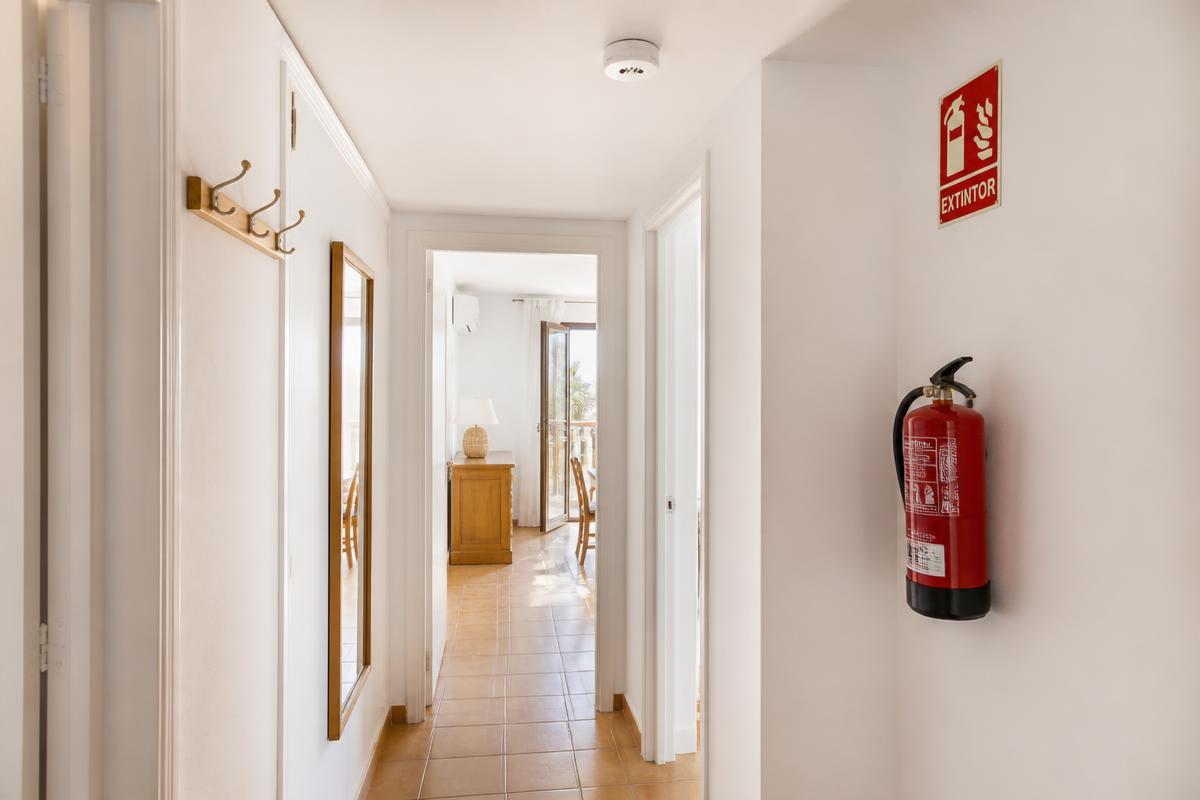
Current Junta de Andalucía VUT guidance includes both a smoke detector and a fire extinguisher among the property requirements.
Bathroom provision also increases with guest capacity. Properties accommodating more than five guests require additional bathroom provision, with further requirements applying where capacity exceeds eight guests.
Owners should therefore avoid assuming that a property is compliant simply because it is well furnished or has previously been used for holiday rental. The authorised capacity and the facilities actually provided should be checked against the current requirements.
Check the Municipality Too
An Andalucía tourism registration does not override municipal planning rules.
This is especially important in areas with high concentrations of holiday rentals, including parts of the Costa del Sol and Andalucía's major tourist cities.
Municipalities can introduce restrictions where the relevant legal requirements are satisfied, and those restrictions may apply to particular buildings, areas or zones.
Before purchasing a property specifically for holiday rental, a buyer should therefore check the current position with the relevant town hall rather than relying solely on an estate agent's statement that the property “has a tourist licence”.
A tourism registration can be an important piece of information, but it does not remove the need to investigate local planning rules.
Community of Owners Rules Can Be Just as Important
Apartment owners and buyers purchasing within an urbanisation should also investigate the community of owners.
Andalucía's VUT framework recognises the importance of restrictions contained in the building's constitutive title or community statutes.
Separate national changes to Spain's Horizontal Property Law became particularly important from 3 April 2025.
For owners wishing to commence tourist-rental activity after that date, prior express approval from the community of owners will generally be required where the Horizontal Property Law applies. The relevant approval threshold is three-fifths of the total owners who also represent three-fifths of the participation quotas.
Different considerations can apply where tourist-rental activity was already being carried out legally before the change, so the timing and history of the activity can be extremely important.
For a buyer, this means that discovering an existing VUT number should lead to further questions.
Check:
- when the tourist activity began
- who is currently registered as the operator
- whether the community statutes contain restrictions
- whether relevant community resolutions have been passed
- whether any approval requirements have been satisfied
- whether the existing activity can continue following the proposed purchase
A tourism registration should not be treated as a substitute for proper legal and community due diligence.
Our guide on whether a community of owners can restrict holiday rentals examines this area in more detail.
Your Obligations Continue After Registration
Once a holiday rental begins operating, compliance does not stop.
Current Junta de Andalucía guidance places continuing obligations on the person or company responsible for the property.
These include providing guests with an appropriate 24-hour contact telephone number, cleaning the accommodation between occupancies, making official complaint forms available and providing guests with relevant information about the property and its surroundings.
Guests may also need to be informed about matters such as:
- community rules
- noise restrictions
- waste-disposal arrangements
- use of communal facilities
- other restrictions affecting their stay
Where relevant, evacuation information may also need to be displayed.
Operators should ensure that details held by the tourism authorities remain accurate when important circumstances relating to the property or operator change.
Guest Registration Is a Separate Requirement
Holiday-rental operators in Andalucía also need to consider Spain's national guest-information reporting regime.
Royal Decree 933/2021 applies across Spain to accommodation activities and is separate from the regional tourism-registration system.
Accommodation providers have obligations concerning the collection and communication of specified guest and booking information.
The rules apply whether the accommodation is operated professionally or privately, although some record-keeping requirements differ between professional and non-professional operators.
Owners should therefore establish the appropriate guest-registration and reporting procedure before accepting bookings.
Having an RTA or VUT registration number does not remove this separate obligation.
What About the National Short-Term Rental Registration Number?
This part of Spain's holiday-rental framework has changed significantly and should be treated with particular care.
Royal Decree 1312/2024 introduced a national short-term rental registration framework that became widely associated with the Número de Registro Único de Alquiler (NRUA).
However, during 2026 Spain's Supreme Court annulled important provisions of the Royal Decree concerning parts of that national registration procedure.
As a result, owners should be cautious about relying on articles, videos or guides written during 2025 that present the original national registration system as though nothing subsequently changed.
The current national position should always be checked against up-to-date official government and BOE information at the time the property is being registered or advertised.
This does not mean that every national short-term rental obligation has disappeared. The point is that the legal position changed following the 2026 judgments and older explanations may now be incomplete or inaccurate.
Buying an Andalucía Property for Holiday Rental
Anyone purchasing an Andalucía property specifically for holiday rental should treat the process as a series of separate checks.
First establish whether a tourism registration exists and whether the registered details correspond with the property being sold.
Then investigate:
- the current municipal planning position
- community statutes and resolutions
- when the tourist activity commenced
- the authorised guest capacity
- the current registered operator
- whether the property satisfies the required standards
- whether any action is required following a sale or change of operator
These questions should ideally be investigated before signing a binding purchase agreement where holiday-rental potential is important to the decision to buy.
Estate-agent descriptions such as “tourist licence included” or “ideal for Airbnb” should never replace independent checks.
A property can have a registration number while still raising separate planning, community, operational or compliance questions.
See our guides on buying a property with an existing tourist licence and questions to ask before buying a holiday rental property.
Treat Compliance as an Ongoing Process
Holiday-rental regulations should not be treated as a one-off box-ticking exercise.
Rules can change at regional, national and municipal level. Community restrictions can also change, and the circumstances of a particular property may change following a sale, refurbishment, alteration in capacity or change of operator.
Owners should periodically review:
- tourism-registration details
- permitted guest capacity
- municipal rules
- community restrictions
- property standards
- safety equipment
- guest-registration procedures
- insurance
- advertising requirements
For buyers, the same principle applies: check the current position rather than relying on what was true when the property first obtained its VUT registration.
Our holiday rental compliance checklist sets out these ongoing checks in a practical format.